
FAQ's - Post Op

There is no question too big or too small for our veterinary team.


Frequently Asked Questions – Post Orthopedic Procedures:

Allow 2-3 hours for your pet’s stomach to settle from the car ride home before feeding. All patients have been started back on solid food post-op before being sent home, unless noted otherwise.
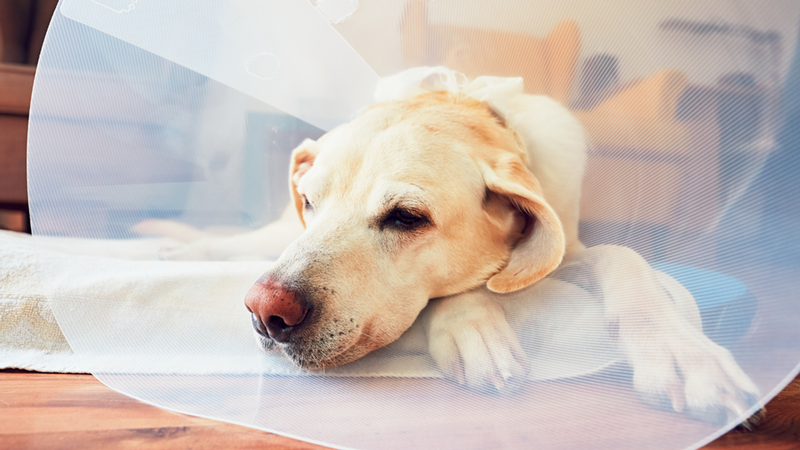
Yes! It is very important for your pet to wear the E-collar for at least 10-14 days post-op while the incision is healing. If your pet licks the incision area this can introduce bacteria into the surgery site and cause a local infection, which could jeopardize the entire surgery.
Your pet had a temporary jig placed during the TPLO surgery to aid with the cutting and rotation of the bone. Placement of the temporary jig requires a small incision in the lower leg. This suture will be removed at your recheck.

Some redness, bruising, and swelling is expected after any surgical procedure. The appearance may worsen over the first 3-4 days before gradually resolving by 1 week after surgery. You may apply a cool compress to the area for 10-15 minutes, 2-3 times daily to help reduce bruising and swelling. Place a thin towel between the skin and the ice pack.

It is NOT normal for the incision to have fluid drainage or open up. If either of these are noted, then give us a call. We will likely ask you to email us a picture of the area (contact@bedrockvet.com) and/or schedule a recheck exam.

It is normal for there to be some swelling around the ankle after any rear limb orthopedic procedure. Gravity pulls the swelling from the surgery site down to the ankle/paw. This should resolve within 5-7 days.
Your pet may be left alone for short periods of time and must be kept confined to a small area/crate while doing so. This will encourage rest and minimize the chance of your pet injuring themselves.
If your pet has been on prescription medications long-term prior to surgery and you are not sure if these are safe to resume once returning home, then please check with our team and/or your regular veterinarian first before doing so. Medications such as Flea/Tick and Heartworm medications should be fine to resume.
Your pet was given a local nerve block to the surgery area that should last for the first 3 days. As this medication wears off you may see a mild setback in your pet’s progress post-op.

Sometimes it can take a few days for your pet to get back to their normal appetite after surgery. You may offer your pet other bland options post-op to help entice them to eat, such as canned food or boiled chicken/rice. Please avoid high-fat or greasy foods. We expect your pet to be drinking within 24 hours of discharge, and eating something within 48 hours of discharge.

Some patients will not eat with their E-collar on. It is okay to remove this temporarily while under direct supervision for them to eat and drink. The E-collar should be replaced immediately after to prevent incision complications.

Your pet was fasted before surgery and only offered small frequent amounts of food post-op. The anesthesia and pain medications can also slow down the intestinal tract. This will cause your pet to have a mild break in their normal defecating schedule. Typically, your pet should have a normal bowel movement by 5-7 days post-op. You can add 1-2 tablespoons of canned pumpkin or Metamucil with each meal to encourage a return to normal bowel movements.

Sometimes with a rear leg procedure, it can be difficult for your pet to position themselves to relieve their bowels. This can cause a patient to try and hold their BM’s longer than normal or they may not be able to stay in position long enough to completely relieve their bowels. Helping support some of your pet’s weight with a sling can be helpful.

Other pets may resist defecating while a sling is beneath them. As long as they are on non-slick surfaces, you may remove the sling to see if your pet will posture to defecate without it.

Yes! It is important for our doctors to see your pet 2-3 weeks post-surgery to assess the healing of the incision site, to remove any sutures/staples, and to see how your pet is progressing post-op.
Your pet should NOT get their incision wet for the first 3 weeks. Please wait until after the incision recheck with our team to determine if they can have a bath. Once we determine the incision is healed, baths can be resumed with extreme care. Avoid slick surfaces to prevent slipping and sliding. Also ensure your pet does not get too excited (zoomies) during and/or after the bath, which could injure the surgical repair during the first 2-3 months post-op.  
Your pet should NOT go to the dog park until AFTER your surgeon has cleared them for higher impact activity. This is typically after X-rays are taken to document bone healing and the soft tissues have been properly conditioned for a return to such high-impact activity. This can take anywhere from 6-12 weeks or more depending upon the injury and healing progress of your pet.


Frequently Asked Questions – Post Soft Tissue Procedures:

Allow 2-3 hours for your pet’s stomach to settle from the car ride home before feeding. All patients have been started back on solid food post-op before being sent home, unless noted otherwise.
Yes! It is very important for your pet to wear the E-collar for at least 10-14 days post-op while the incision is healing. If your pet licks the incision area this can introduce bacteria into the surgery site and cause a local infection, which could jeopardize the entire surgery.

Some redness, bruising, and swelling is expected after any surgical procedure. The appearance may worsen over the first 3-4 days before gradually resolving by 1 week after surgery. You may apply a cool compress to the area for 10-15 minutes, 2-3 times daily to help reduce bruising and swelling. Place a thin towel between the skin and the ice pack.

It is NOT normal for the incision to have fluid drainage or open up. If either of these are noted, then give us a call. We will likely ask you to email us a picture of the area (contact@bedrockvet.com) and/or schedule a recheck exam.

Your pet may be left alone for short periods of time and must be kept confined to a small area/crate while doing so. This will encourage rest and minimize the chance of your pet injuring themselves.
If your pet has been on prescription medications long-term prior to surgery and you are not sure if these are safe to resume once returning home, then please check with our team and/or your regular veterinarian first before doing so. Medications such as Flea/Tick and Heartworm medications should be fine to resume.
Your pet was given a local nerve block to the surgery area that should last for the first 3 days. As this medication wears off you may see a mild setback in your pet’s progress post-op.

Sometimes it can take a few days for your pet to get back to their normal appetite after surgery. You may offer your pet other bland options post-op to help entice them to eat, such as canned food or boiled chicken/rice. Please avoid high-fat or greasy foods. We expect your pet to be drinking within 24 hours of discharge, and eating something within 48 hours of discharge.

Some patients will not eat with their E-collar on. It is okay to remove this temporarily while under direct supervision for them to eat and drink. The E-collar should be replaced immediately after to prevent incision complications.

Your pet was fasted before surgery and only offered small frequent amounts of food post-op. The anesthesia and pain medications can also slow down the intestinal tract. This will cause your pet to have a mild break in their normal defecating schedule. Typically, your pet should have a normal bowel movement by 5-7 days post-op. You can add 1-2 tablespoons of canned pumpkin or Metamucil with each meal to encourage a return to normal bowel movements.

Sometimes with a rear leg procedure, it can be difficult for your pet to position themselves to relieve their bowels. This can cause a patient to try and hold their BM’s longer than normal or they may not be able to stay in position long enough to completely relieve their bowels. Helping support some of your pet’s weight with a sling can be helpful.

Other pets may resist defecating while a sling is beneath them. As long as they are on non-slick surfaces, you may remove the sling to see if your pet will posture to defecate without it.

Yes! It is important for our doctors to see your pet 2-3 weeks post-surgery to assess the healing of the incision site, to remove any sutures/staples, and to see how your pet is progressing post-op.
Your pet should NOT get their incision wet for the first 3 weeks. Please wait until after the incision recheck with our team to determine if they can have a bath. Once we determine the incision is healed, baths can be resumed with extreme care. Avoid slick surfaces to prevent slipping and sliding. Also ensure your pet does not get too excited (zoomies) during and/or after the bath, which could injure the surgical repair during the first 2-3 months post-op.  
Your pet should NOT go to the dog park until AFTER your surgeon has cleared them for higher impact activity.